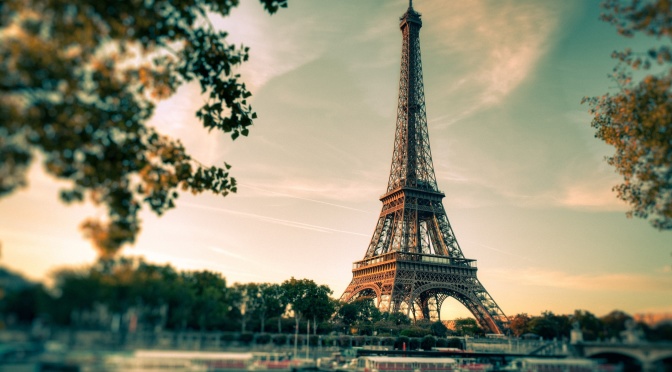
Paris what to see: Paris is certainly a city capable of conquering from the first glance. The French capital is magnificent in all seasons and at any time of the day. The inviting scent of freshly baked baguettes in the numerous "boulangeries", the walks along the Seine, the artists of Montmartre, the lively nightlife, the cafes and restaurants in the center: Paris is a multi-ethnic metropolis with many shades, and knows how to please the different tastes: it will certainly not disappoint you!
Paris what to see
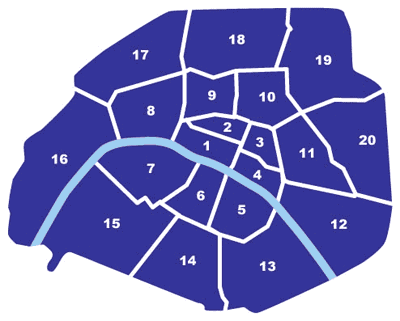
The center of Paris can be divided into two macro-areas: the rive droite (right bank) and the rive gauche (left bank) with respect to the course of the Seine. The city is however divided into 20 districts ( arrondissements ) that start from the center and branch out clockwise.
Moving from one area to another is easy and convenient as each district is served by a dense network of subways and trains that allow you to reach every point of Paris. Find out HOW TO GET TO PARIS .
A single post would not be enough to list all the beautiful things to see in Paris: Below I have extrapolated the most significant places that a tourist should not miss during their stay in the French capital.
The Louvre Museum
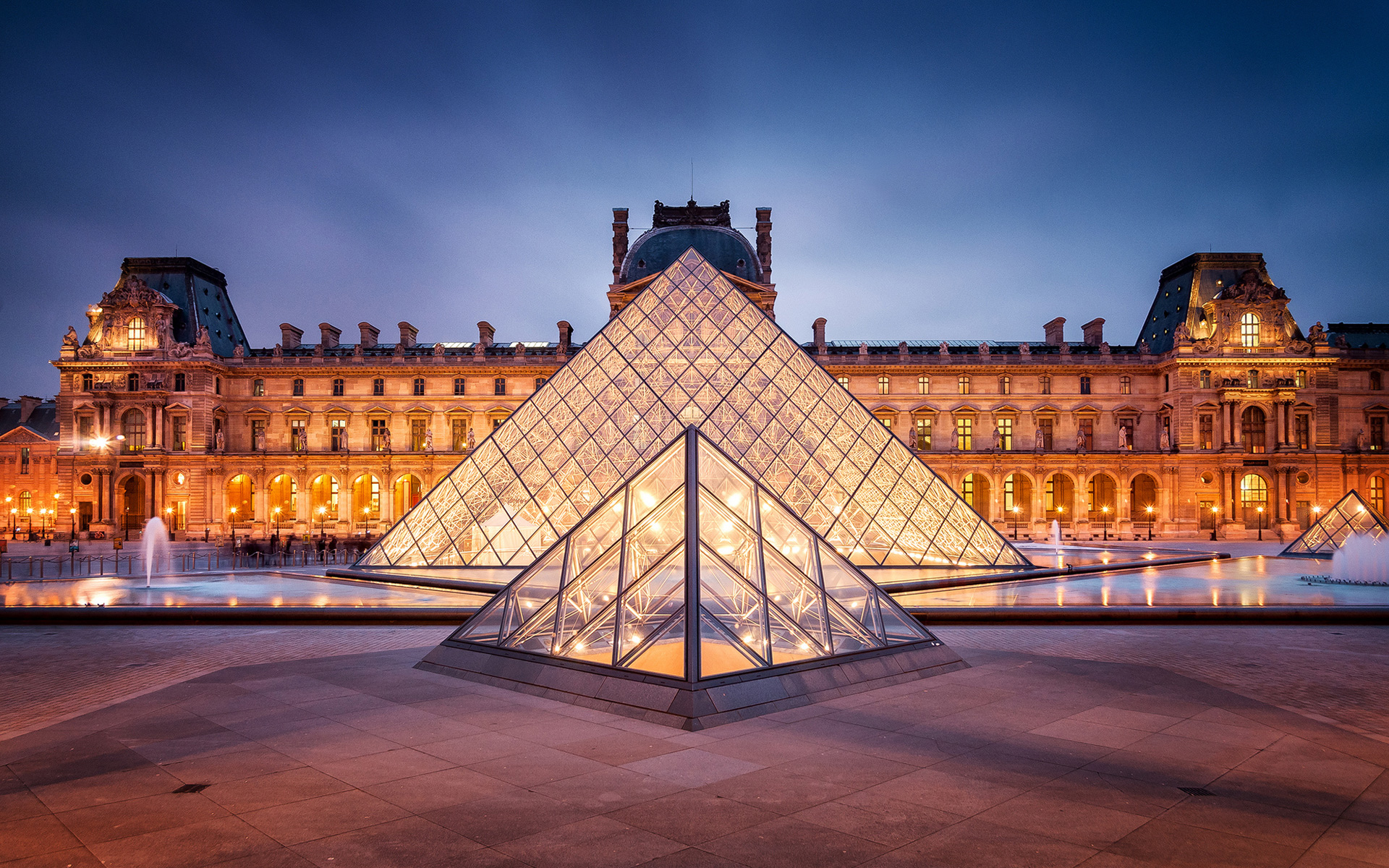
The Louvre , established in 1793 and located in the 1st arrondissement , is certainly one of the most famous museums in the world: among its 380,000 works of art are the Mona Lisa and the Venus of the Rocks by Leonardo da Vinci, the Nike of Samothrace, the Venus de Milo. The museum offers Egyptian, Greek, Etruscan, Roman, Arab and Western art collections up to 1848 (the Musée d'Orsay instead tells the art belonging to the modern age), collected by the French governments over the centuries: the exposure is so vast that a whole day is not enough to see it all.
In the square of the Palais du Louvre stands the great glass pyramid, 21 meters high, which is also the main entrance to the museum. There are also other less crowded entrances to the pyramid: the Galerie du Carousel (which can be accessed directly from the metro station), the Richelieu Passage and the Lion's Gate .
For info: http://www.louvre.fr/
Hours: Monday, Thursday, Saturday and Sunday: from 9.00 to 18.00
Wednesday and Friday from 9.00 to 21.45.
Closed on Tuesdays . Admission price: 12-16Euro
Jardin des Tuleries
The Tuileries Garden , located between the Arc du Triomphe du Carrousel (opposite the Louvre entrance) to the Place de la Concorde , is the oldest and most visited garden in Paris. Declared a World Heritage Site by UNESCO, it looks like a wonderful French-style garden, square and geometric, built in the 17th century by the architect André Le Notre, at the behest of Caterina dei Medici. Inside the garden there is a pond and a Ferris wheel.

The Pompidou Center
A few steps from the Louvre Museum stands the Center National d'Art et de Culture Georges Pompidou (also called Center Beaubourg), designed by the Italian architect Renzo Piano in 1977.
This area has relaunched Paris as the capital of French modernity. The Pompidou Center is an imposing and colorful steel structure, which houses, on the ground floor, the Forum du Center Pompidou , an open space that hosts temporary exhibitions, while on the remaining floors there is the Bibliothèque Publique d'Information , a large library public, the Industrial Design Center and the National Museum of Modern Art (MNAM).

Marais - La Bastille
Marais is a district of the Right Bank located north of Ile Saint-Louis , within the third and fourth districts. This is one of the central and historic districts of Paris: here are some of the oldest streets and buildings in the city, dating back to the pre-revolutionary era. Originally a neighborhood for the wealthy, this area was reclaimed by bohemians after the revolution: today Le Marais is filled with museums, cafes, bakeries and bars.
Between the 11th and 12th Arrondissement is the recently redeveloped neighborhood of La Bastille , where the famous fortress-prison was built, symbol of the French Revolution, which was stormed and destroyed by the revolutionaries on 14 July 1789 and of which, today , only a few traces of the perimeter remain. At the center of the square stands the July Column , in memory of the martyrs of the revolutions of 1830 and 1848. Today, Piazza della Bastiglia is a very lively district full of nightlife venues.
Noteworthy are the Picasso Museum and the Opéra Bastille , the second largest opera house in Paris, inaugurated on 14 July 1989 on the occasion of the 200th anniversary of the storming of the Bastille.

Île de la Cité
Ile de la Cité is the name of the island that rises on the Seine in the center of Paris: it represents both the geographical and the historical center, since it is here that the first settlement was built that gave rise to the current metropolis. The island is connected to both of its shores by nine bridges, the most famous of which is the Pont Neuf . The Ile de la Cité houses some of the main monuments of the city such as the Notre-Dame cathedral , the Sainte Chapelle and the Conciergerie , the old royal palace transformed into a prison where the enemies of the revolution (including Marie Antoinette) were imprisoned. .
The Cathédrale de Notre-Dame de Paris , known throughout the world thanks to the novel of the same name by Victor Hugo, is the most visited monument in the city and one of the best known symbols of the French capital. Built between 1160 and 1345, the cathedral represents the quintessential example of French Gothic architecture. On its top, you can admire the French capital from other perspectives, as is the case when climbing the Eiffel Tower .

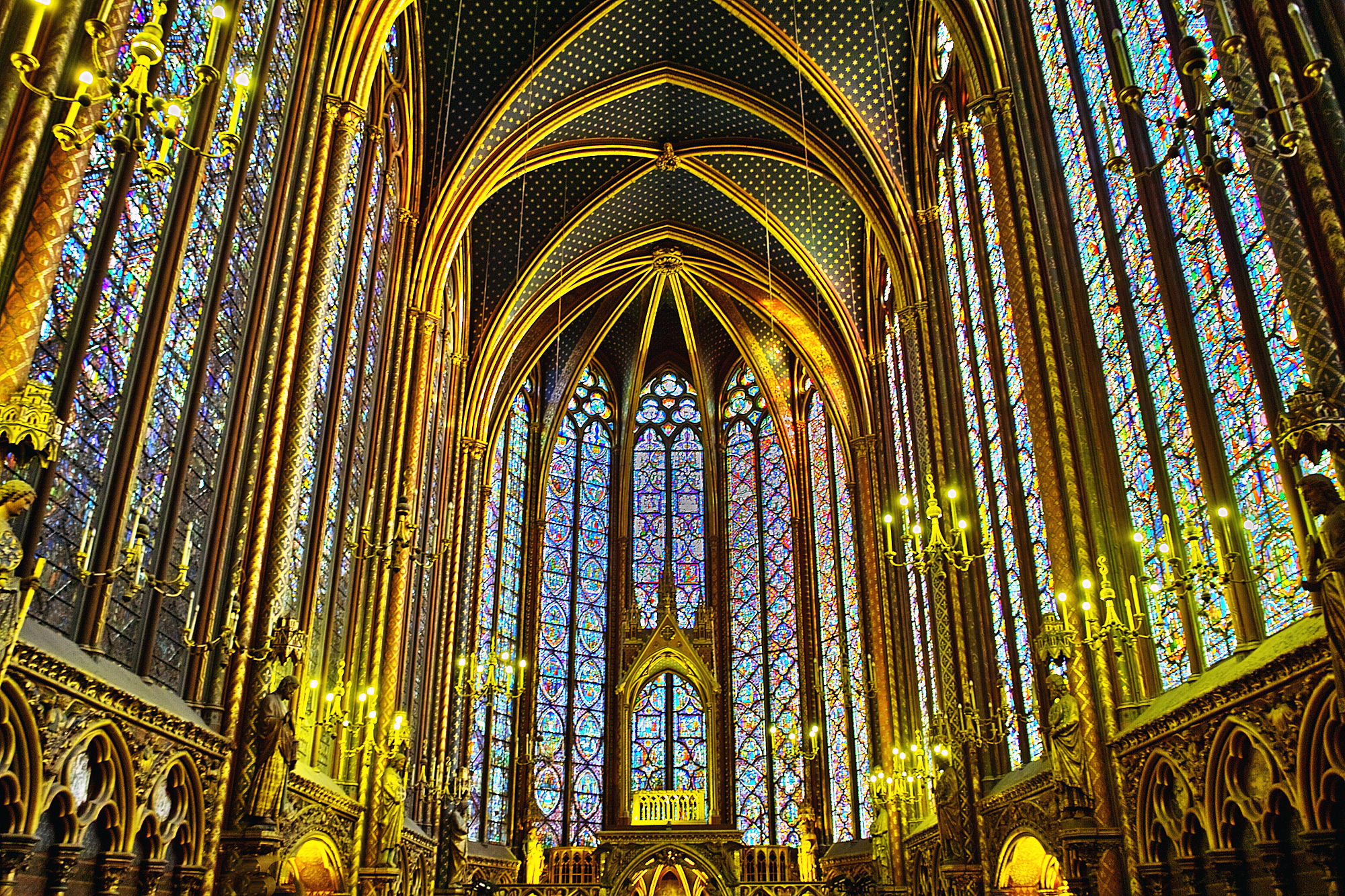
Also on the Ile de la Cité is the Sainte Chapelle : In full French Gothic style, it was built by King Louis IX in the 13th century as a reliquary, to keep the crown of thorns of Jesus.
The particularity of the church is represented by a unique complex of fifteen stained glass windows and a large finely colored rose window that form wonderful plays of light.
The Île de la Cité is also connected to the Ile Saint Louis . While the Île de la Cité is characterized by squares, monuments and historical places, the Île Saint Louis is rather quiet and lends itself more to a romantic walk: you can stop on the benches along the Seine or retreat to one of the many cafés. . It is possible to do the tour of the Ile de la Citè and the Seine also on board the typical Bateaux Parisiens .
The Latin Quarter
The Latin Quarter is located in the 5th Arrondissement , on the Left Bank , and is one of the most famous and most picturesque districts of the city: its name derives from the fact that, before the French Revolution, all communication between professors and students took place in Latin . The Latin Quarter has in fact been the student district of Paris since the 12th century, when Sorbonne University in Paris .
Among its multitude of alleys and squares you can find numerous cafes, shops and vintage bookstores. If you happen to be in the evening, don't miss the opportunity to dine in one of the many ethnic restaurants (Greek, Moroccan or Italian). The district is concentrated between the Jardin du Luxemburg and Jardin des Plantes , a botanical garden established in 1926 as a reserve of medicinal plants.
Among the attractions found in the Latin Quarter we mention the Musée National du Moyen Age , the Musée National d'Histoire Naturelle the museum of the Institut du Monde Arabe , and the imposing Panthéon , a jewel of neoclassical architecture.

Saint Germain and Montparnasse
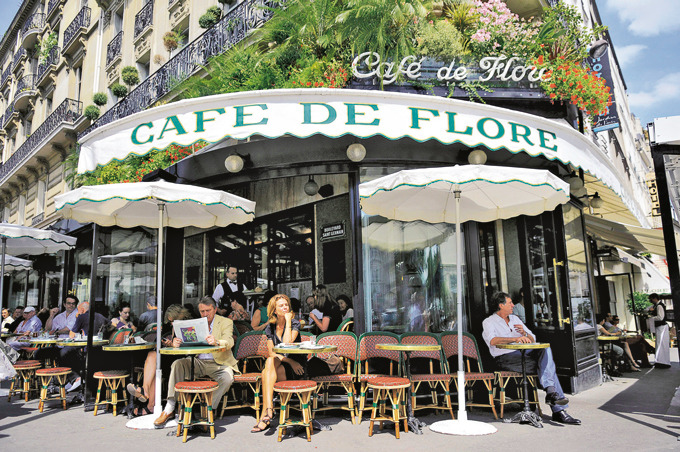
The Saint-Germain-des-prés ( 6th arrondissement ) has a series of narrow streets, with many bars, very lively and very busy in the evening. It houses the church of Saint-Germain des Prés , the oldest in Paris, built in the 11th century, and the Eglise Saint-Sulpice . Also not to be missed are the Jardin du Luxembourg .
Numerous non-conformist intellectuals gathered in the historic cafes of Saint-Germain during the occupation and then after the war: even if today the numerous clothing and luxury shops have replaced the bookstores and cultural institutions, the old cafes that hosted the artists remain still there, evoking the atmosphere of the past.
In the Montparnasse , a little further south, you can visit the Cemetery , where artists such as Baudelaire, Simonne de Beauvoir, Guy de Maupassant, Serge Gainsbourg and Philippe Noiret rest. The name Montparnasse (Mount Parnassus) derives from the fact that a small hill once stood between the boulevard Montparnasse and the boulevard Raspail, formed by the scraps from the limestone quarries that once were in the area.
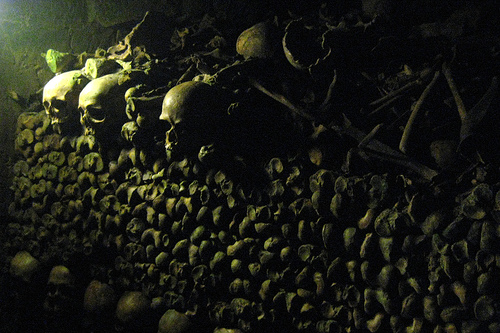
The Paris Catacombs are also open to the public. They were born as an underground ossuary, built towards the end of the eighteenth century to cope with the spread of epidemics caused by the overcrowding of some cemeteries. They are formed by a path of about 1.7 km that winds 20 meters underground and, inside them, the remains of about 6 million people are preserved. The entrance is located at Avenue du Colonel Henri Rol-Tanguy 1 .
Hours: from 10.00 to 20.00.
Closed on Mondays Admission: 10.00 Euros
The Montparnasse , once the heart of Parisian cultural life, underwent, in the 1970s and 1980s, a series of urban transformations that changed its face and made what was once an artists' district unrecognizable. Symbol of this transformation is the Monparnasse Tower : with 56 floors and 196 m high, this skyscraper offers the widest panoramic view of the city of Paris: from the terrace on the top floor you can enjoy a 360 ° view, ideal for take great photographs of the Paris skyline.
Hours: from 9.30 to 22.30
Admission: 15.50 Euros

The D'Orsay Museum
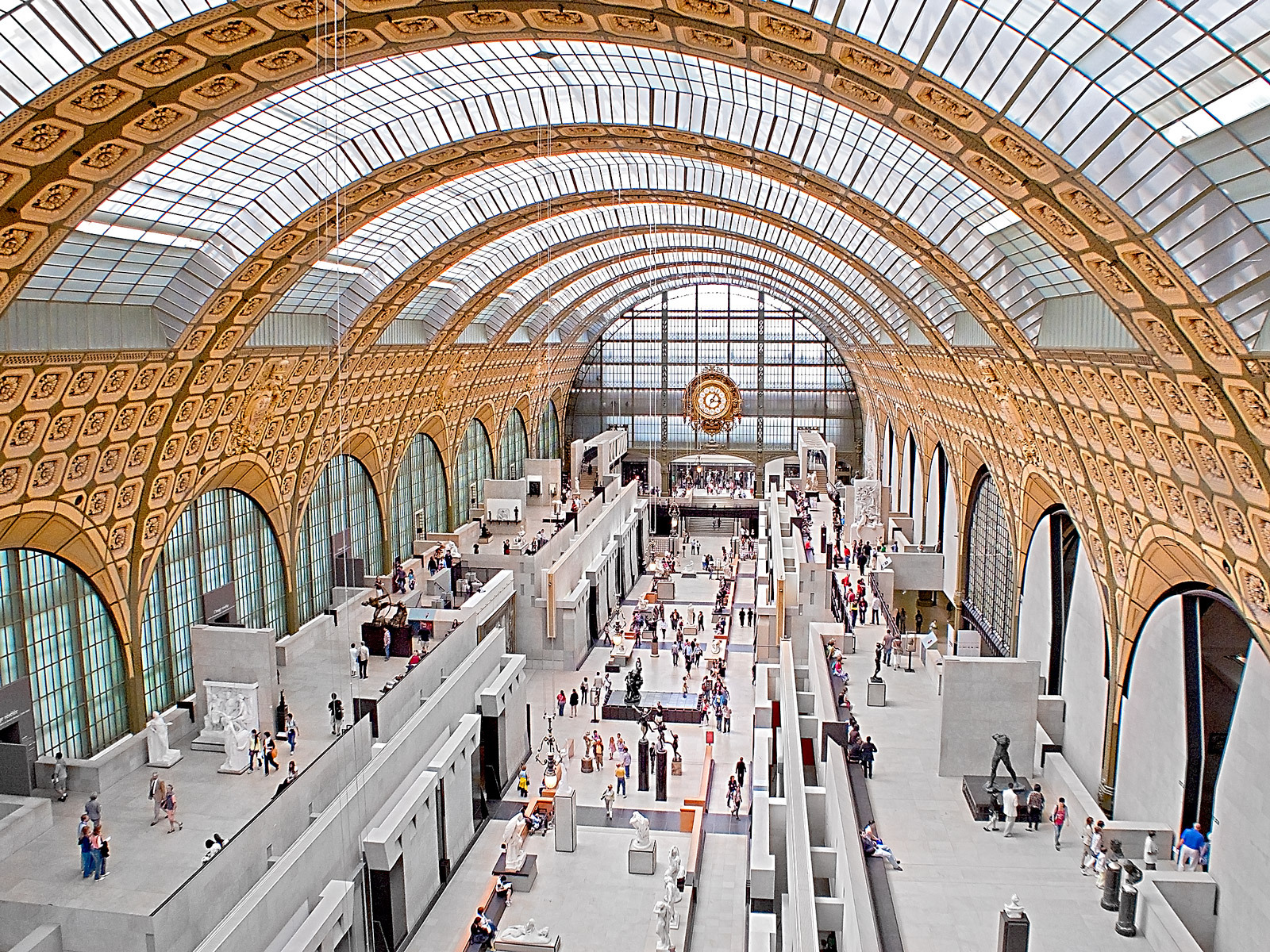
The Orsay Museum , located in the Faubourg Saint-Germain ( 7th arrondissement ), exhibits a rich collection of paintings, sculptures and art objects created between 1840 and 1914 and houses the best artistic production of the Impressionists : Manet , Pissarro, Monet, Cézanne, Gauguin etc.
Another peculiarity of the Museum is given by the fact that it was set up inside an old railway station of 1900, of which the structure and the clock are still clearly visible.
Hours: open from Tuesday to Sunday from 9.30 to 18.00
Admission: 11.00 Euro
La Tour Eiffel and Les Invalides
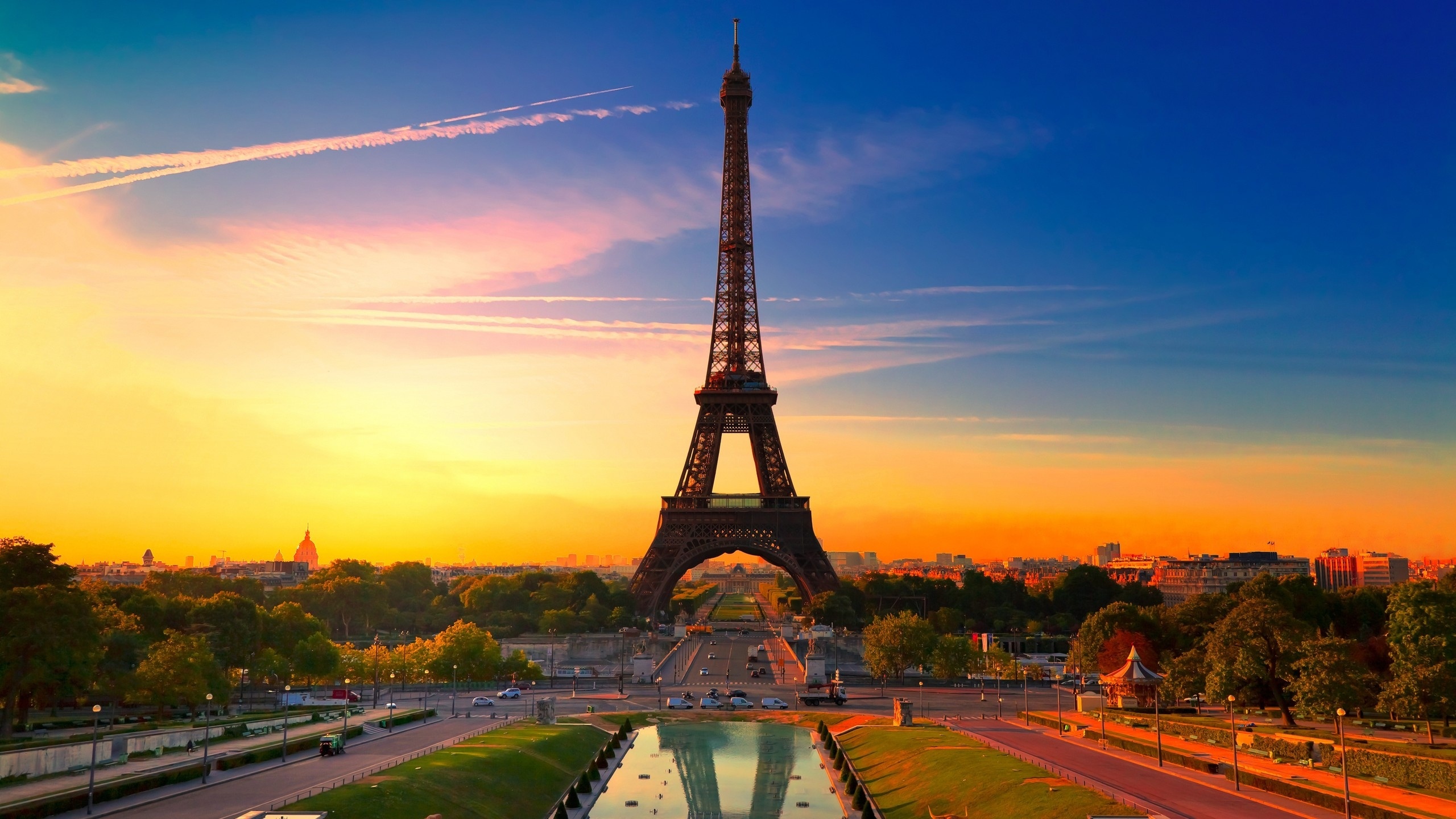
The Eiffel Tower is undoubtedly the most famous monument in Paris and is visited by millions of tourists every year.
If you come to Paris you can't forget to come and see it! Born as a temporary structure for the Universal Exhibition of 1889 and designed by the engineer Gustave Eiffel, the Eiffel Tower is a huge iron structure that dominates the city from its 324 meters high. It consists of three floors that can be reached by lift or on foot via stairs and houses souvenir shops, exhibition spaces and the Jules Verne restaurant .
From the top terrace, reachable by lift, you can enjoy a breathtaking view over the whole city, as well as being able to enjoy an excellent romantic dinner. In the evening the tower is illuminated by 20,000 lights, offering an unmissable and unique show: in addition, the first five minutes of each hour, the tower sparkles.
To avoid the queue at the ticket office, we recommend that you buy your ticket online .
However, do it a few months in advance as the tickets sell out quickly. Hours: from 9.30 to 23.30
Admission: 15.50 Euros
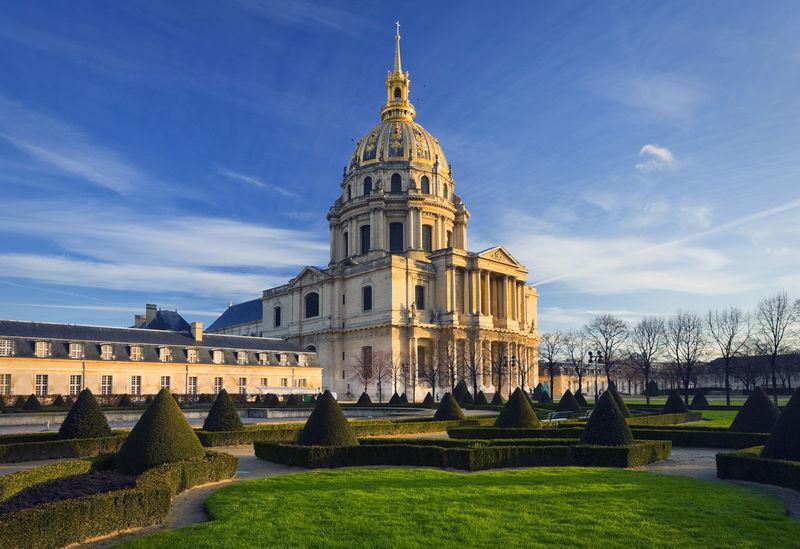
A short distance from the Eiffel Tower is the monumental complex Les Invalides ( L'Hôtel National des Invalides ), a vast Baroque architectural complex built in the 17th century to welcome and assist war invalids. Today it houses the Army Museum , one of the largest in the world, which houses weapons and armor from all over the world, original documents and an exhibition dedicated to the Second World War. In the center, L ' Eglise du Dome houses, in its circular crypt, the tomb of Napoleon .
Hours: from 10.00 to 17.00
Admission: 9.50 Euros
Palais de Chaillot or Trocadéro
The Palais de Chaillot , also called Trocadero , is located on the Chaillot hill opposite the Eiffel Tower. The peculiarity of the building are the two curved wings that surround a large central terrace from which you can enjoy a splendid view of the Eiffel Tower . In the building there are the statues created by Paul Belmondo, Léon-Ernest Drivier and Marcel Gimond. Inside the Trocadero there is a theater and some museums.
The Champs-Elysées
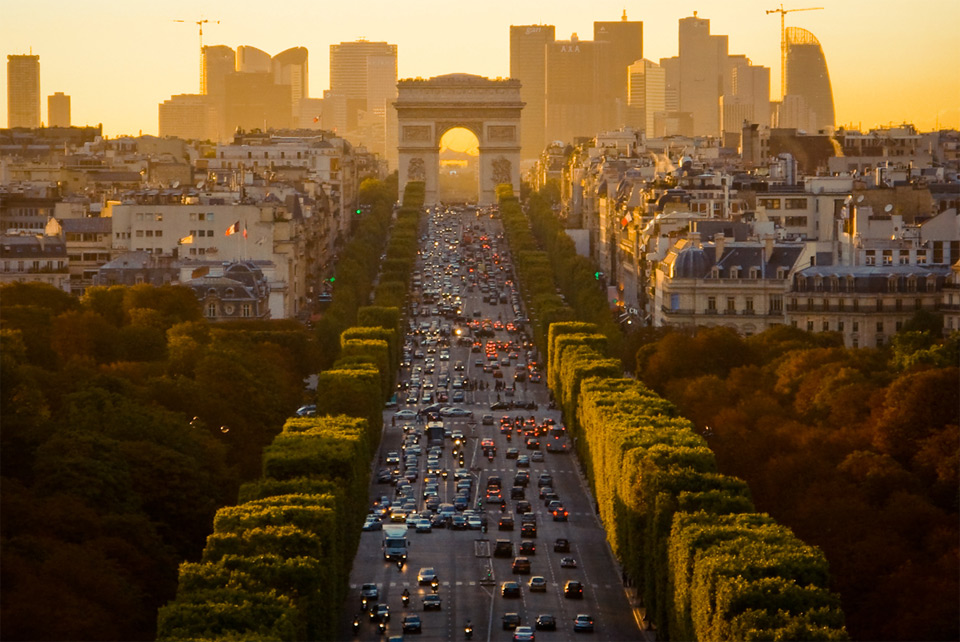
The Champs Elysées , the most popular Parisian promenade, represent the Paris of fashion and shopping: along the avenue there are the boutiques of the most prestigious French and international designers (Chanel, Louis Vitton, Bulgari, Dior and many others) as well as cinemas, theaters, restaurants and night clubs. The Champs Elysées are wonderful especially in the evening and during the celebrations when flags and lights are displayed. This avenue, more than 2 km long, connects Place de la Concorde to Place Charles de Gaulle , in the center of which is the famous Arc de Triomphe , built at the behest of Napoleon.
Place Vendome
Place Vendome , one of the most beautiful and famous squares in Paris, was built between the end of the 17th and the beginning of the 18th century at the behest of Louis XIV. The square, with an octagonal plan, is located north of the " Tuileries ".
The square, one of the favorite destinations for shopping lovers: in fact, among the elegant buildings that surround it we find banks, jewelers and numerous boutiques, including the Parisian headquarters of the "Maison" Valentino . Here you will also find the Ministry of Justice and the historic Hotel Ritz , inaugurated in 1898, where many personalities visiting Paris are hosted.
In the center of the square stands a bronze column about 44 meters high, built at the behest of Napoleon and dedicated to the victory of the Battle of Austerlitz . The spiral of the bronze column is decorated with 66 bronze reliefs that recall the triumphs of the Napoleonic army. Inside there is a spiral staircase that goes up to the top, where a statue of Napoleon in imperial clothes is placed.

Montmartre and Pigalle
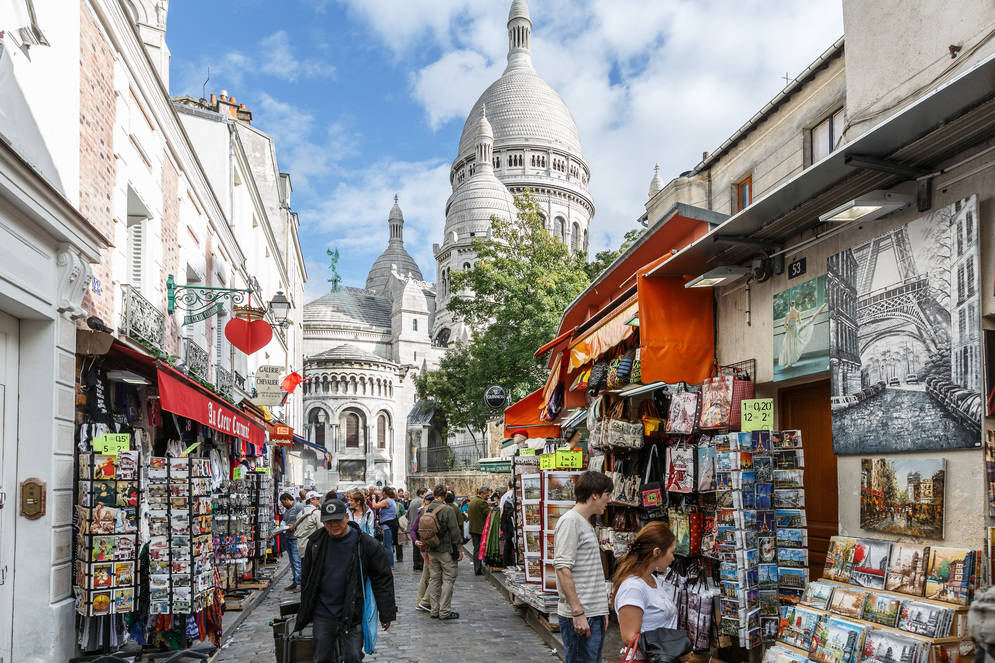
Those of Montmartre and Pigalle are two neighboring districts. The first, which is located near the Absesses , is an artists' district that lies at the foot of the Basilique du Sacré Coeur , built between 1873 and 1919 on the top of the Montmartre hill, the second is known as the light district. redheads and night shows: visit Place du Tertre and Place Pigalle , the Moulin Rouge and Moulin de la Galette , where nightlife is guaranteed.
The Sacre Coeur Basilica , located on the top of Montmartre, is one of the symbols and one of the highest places in the city: from its staircase you can admire all of Paris at your feet! The basilica can be reached by climbing a long staircase (230 steps), or by taking a comfortable funicular, which takes you to the top in a few seconds. Entrance to the Basilica is free, while access to the dome is located outside the church on the left: from its top you can enjoy a 360 degree view of Paris. Admission costs 5 euros.
Another place to visit in Montmartre is the artists' square, where painters and portraitists are always at work. Many famous artists have passed through here in the history of this district, including Toulouse-Lautrec, Pisarro, Van Gogh, Utrillo, Modigliani and Picasso. In Place des Absesses do not miss a visit to the Wall of Ti Amo (" Le mur des je t'aime "), a work of art composed of 612 blue tiles measuring 21cm by 29 with the inscription "Ti Amo" in 311 different languages covering a 10 by 4 meter wall.
The Père - Lachaise cemetery
The Père-Lachaise Cemetery is the largest and best known cemetery in Paris. Located in the east of Paris and is famous for hosting the graves of many famous people such as Balzac, Oscar Wilde, Delacroix, Modigliani, Jim Morrison and Chopin. In particular, Jim Morrison's grave is located in sector 6, that of Oscar Wilde in sector 89 and that of Balzac in sector 48.

Bois de Boulogne
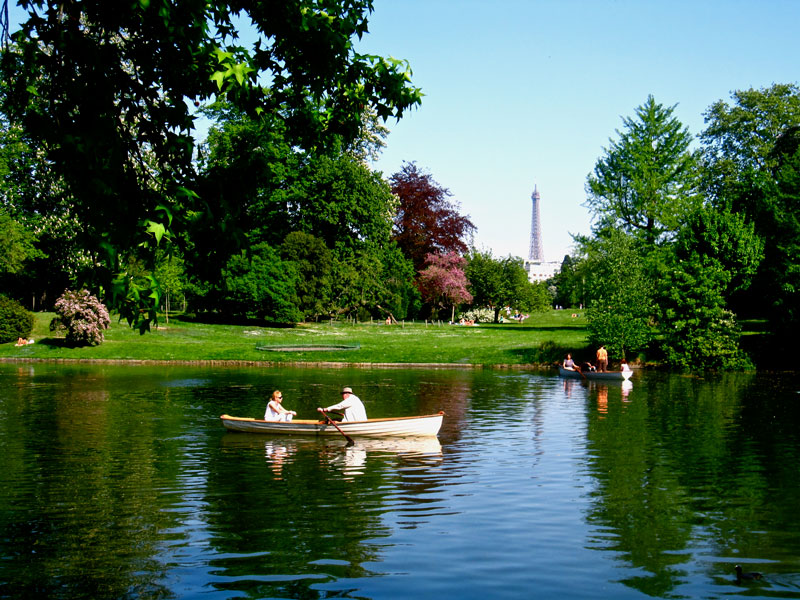
To the west of Paris, in the 16th arrondissement , lies the Bois de Boulogne , an immense green area of 845 hectares commissioned by Baron Haussmann in the nineteenth century, today one of the largest and most popular parks in Paris, located in the western part of the city , near the suburbs of Boulogne-Billancourt and Neuilly-sur-Seine .
The wood was, in the past, the hunting reserve of the Kings of France, while today it is the ideal place to relax and practice outdoor activities: there are two connected lakes for rowing, a racecourse, an adventure park for children and a botanical garden.
La Defense
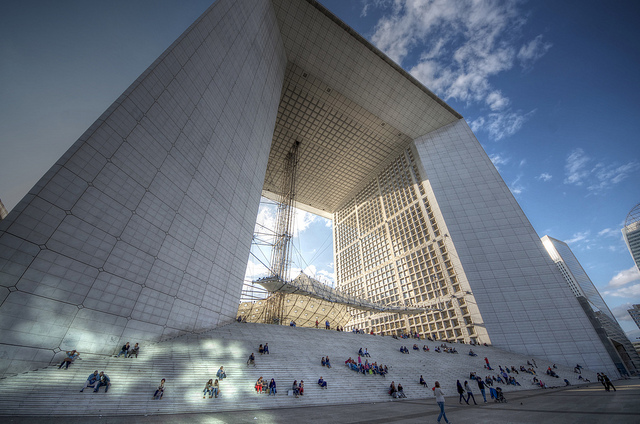
The Arco de La Défense is a modern monument located in the La Défense district , on the western extension of the historical axis of Paris that goes from the Louvre to the Arc de Triomphe. A modern and futuristic monument, the Arch looks like a cube 110 meters high and hollowed out in the center and covered with glass and white Carrara marble. The hollow space inside is so large that it could hold Notre Dame Cathedral, and its roof weighs around 30,000 tons.
The arch of the Défense was designed by the Danish architect Johann Otto von Spreckelsen and was inaugurated on 14 July 1989, on the occasion of the bicentenary of the French Revolution: his idea was that the arch should be a monument consecrated to humanity and to humanitarian ideals, rather than military victories such as the Arc de Triomphe.
Inside there are government offices, a congress and exhibition center, the Information Technology Museum and a restaurant. On its top there is a large panoramic terrace accessible to the public and reachable by a panoramic lift, from which you can enjoy a wonderful view that sweeps from the Arc de Triomphe to the Louvre Museum, the Eiffel Tower and the Montparnasse Tower.
Hours: open every day from 10.00 to 20.00
Admission: 10 Euros
Paris what to see: Map of attractions
92044 Puteaux, France
France
16 Rue du Repos, 75020 Paris, France
75009 Paris, France
Place du Tertre, 75018 Paris, France
75018 Paris, France
35 Rue du Chevalier de la Barre, 75018 Paris, France
Paris, France
Place Charles de Gaulle, 75008 Paris, France
75001 Paris, France
Paris, France
75116 Paris, France
75007 Paris, France
Field of Mars, 5 Avenue Anatole France, 75007 Paris, France
1 Rue de la Légion d'Honneur, 75007 Paris, France
Inspection Générale des Carrières, 1 Avenue du Colonel Henri Rol-Tanguy, 75014 Paris, France
33 Avenue du Maine, 75015 Paris, France
Paris, France
75006 Paris, France
Place du Panthéon, 75005 Paris, France
1 Rue des Fossés Saint-Bernard, 75005 Paris, France
75005 Paris, France
75006 Paris, France
Paris, France
75005 Paris, France
75004 Paris, France
2 Boulevard du Palais, 75001 Paris, France
8 Boulevard du Palais, 75001 Paris, France
75004 Paris, France
75001 Paris, France
75004 Paris, France
75004 Paris, France
Paris, France
75004 Paris, France
113 Rue de Rivoli, 75001 Paris, France
75001 Paris, France